GutterBro – Gutter Cleaning in Smithtown, NY
Fast, Reliable and Affordable Gutter Services – Always on Time
Explore All Gutter Profile Shape Options
—— Understanding Gutter Shapes ——
Understanding the Designs That Shape Modern Gutter Systems
While gutter materials, colors, and construction methods often receive the most attention, the profile shape of a gutter is one of the most important factors influencing both performance and appearance. The shape determines how much water the gutter can carry, how efficiently water flows through the system, how the gutter complements a property’s architecture, and where it is most commonly used.
1. K-Style Gutters 2. Half-Round Gutters 3. Box Gutters 4. Fascia Gutters
Whether you’re evaluating gutters for a residential home, commercial building, or custom construction project, understanding the different profile options can help you make a more informed decision.
A gutter profile refers to the shape of the gutter when viewed from the end. Each profile is designed with specific drainage capabilities, aesthetic characteristics, and installation applications in mind. Some gutter shapes prioritize maximum water capacity, while others focus on architectural appearance or specialized drainage requirements. The profile selected for a property often depends on factors such as roof size, rainfall volume, building style, and maintenance preferences.
The profile of a gutter affects far more than appearance alone. A properly selected gutter shape can help:
While many homes can successfully utilize multiple gutter profiles, certain designs are often better suited for specific applications.
Residential:
Commercial / Industrial:
The size of the roof, water volume, building design, and drainage demands all influence which profile is most appropriate.
Not all gutter shapes handle the same volume of water. For example, K-style gutters are known for their excellent capacity relative to their size, making them the most common residential choice.
Box gutters offer even greater capacity and are frequently used on commercial buildings where large roof surfaces generate significant runoff. Half-round gutters prioritize smooth water flow and traditional appearance, while fascia gutters combine drainage functionality with a clean, integrated roofline design.
Different gutter profiles complement different architectural properties. Selecting a design that matches your structure preserves curb appeal while ensuring optimal structural safety.
The Industry Standard for Residential Rainwater Management
Among all gutter profile designs available today, K-style gutters remain the most widely installed option on residential properties throughout the United States. Their popularity stems from an ideal combination of performance, appearance, affordability, and versatility, making them the preferred choice for both new construction and gutter replacement projects.
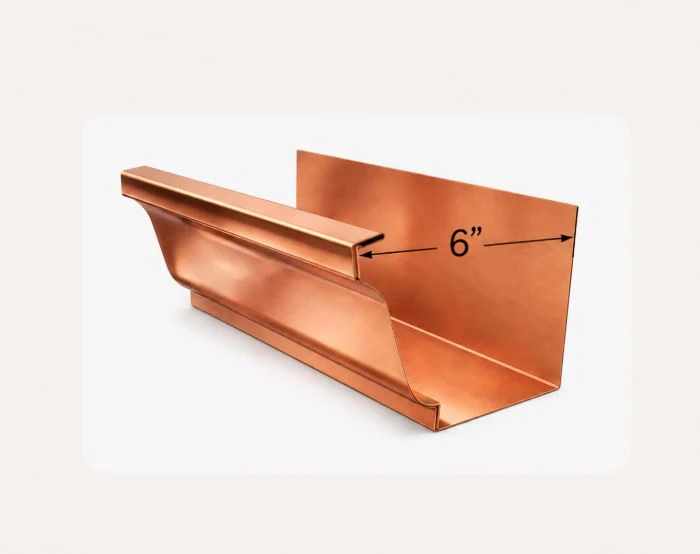
K-style gutters feature a flat back that attaches directly to the fascia board and a decorative front profile that resembles crown molding when viewed from the side. This unique shape gives the gutter a more finished architectural appearance than traditional rounded profiles while maintaining excellent drainage performance.
Homeowners often choose K-style systems because they offer:
The shape of the profile creates a deeper trough and greater water volume capacity compared to many traditional gutter styles. This allows K-style systems to efficiently manage runoff from larger roof surfaces while helping reduce the risk of overflow during heavy rainfall.
While K-style gutters work exceptionally well for most homes, every property is unique. The ideal choice ultimately depends on a property's architecture, drainage requirements, and aesthetic preferences.
For most homeowners, K-style gutters provide an excellent balance of appearance, performance, durability, and value. Their ability to efficiently manage rainwater while complementing a wide variety of architectural styles has made them the most commonly installed gutter profile in the country.
K-style gutters are typically available in several size options.
| Profile Shape | Decorative crown-molding style front with flat back |
|---|---|
| Best For | Most residential properties |
| Water Capacity | High |
| Common Sizes | 5-inch and 6-inch |
| Seamless Available | Yes |
| Maintenance Level | Low |
| Gutter Guard Compatible | Yes |
| Typical Material Options | Aluminum, Steel, Copper |
| Ideal Property Types | Ranch, Colonial, Cape Cod, Contemporary, Multi-Family |
| Primary Advantage | Excellent balance of capacity, appearance, and value |
| Potential Limitation | Less historically authentic than half-round systems |
| If You Want... | K-Style Gutters Are a Good Choice If... |
|---|---|
| Maximum Value | Yes ✓ |
| High Water Capacity | Yes ✓ |
| Modern Appearance | Yes ✓ |
| Seamless Installation | Yes ✓ |
| Most Color Options | Yes ✓ |
| Historic Authenticity | Consider Half-Round |
| Commercial Drainage | Consider Box Gutters |
A Timeless Gutter Profile Known for Classic Appearance and Efficient Drainage
Long before K‑style gutters became the standard for modern homes, half‑round gutters were one of the most widely used gutter designs in residential construction. Their simple semicircular shape has remained popular for generations and continues to be a preferred choice for historic homes, luxury properties, and homeowners seeking a more traditional architectural appearance. While half‑round gutters differ significantly from modern K‑style systems in both appearance and functionality, they offer unique advantages that make them an attractive option for specific property types and design preferences.
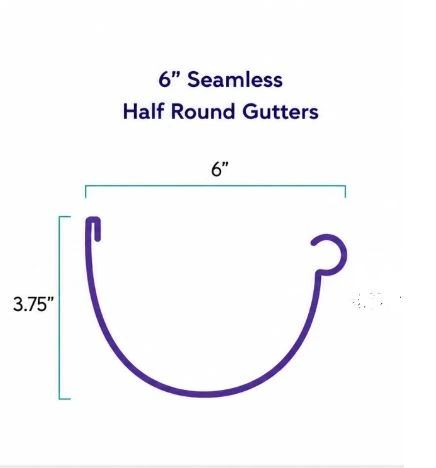
Half‑round gutters feature a smooth semicircular profile that resembles a pipe cut lengthwise. Unlike K‑style gutters, which have decorative angles and flat surfaces, half‑round gutters maintain a rounded interior and exterior shape. This simple design creates a clean, elegant appearance that has been used on homes and buildings for centuries.
Because of their classic profile, half‑round gutters are often associated with:
One of the most notable benefits of half‑round gutters is the way water moves through the system. The rounded interior minimizes corners and flat surfaces where debris can accumulate, allowing rainwater to flow smoothly toward downspouts. This design can help reduce buildup and improve drainage efficiency under normal conditions. The smooth channel also makes cleaning easier compared to some gutter profiles that contain multiple angles and corners.
Half‑round gutters are often selected for architectural reasons as much as performance reasons. Many historic preservation projects utilize half‑round systems because they closely match the gutter styles originally installed on older homes. Likewise, custom luxury homes frequently incorporate half‑round gutters to enhance visual appeal and complement premium exterior finishes. When paired with copper, half‑round gutters can create a distinctive appearance that adds character and long‑term value to a property.
Half‑round gutters are available in several materials, including:
Among these options, copper remains one of the most popular choices due to its durability and the attractive patina it develops over time. Aluminum half‑round systems provide a more budget‑friendly alternative while maintaining the same classic profile.
Half‑round gutters offer several unique benefits:
While half‑round gutters offer exceptional visual appeal, they may not be the ideal solution for every property. Compared to K‑style systems, they typically:
For many homeowners, these considerations are outweighed by the profile's aesthetic advantages and traditional character.
Half‑round gutters continue to be one of the most recognizable and respected gutter profiles in the industry. Their elegant appearance, smooth water flow characteristics, and compatibility with premium materials have helped them remain relevant for centuries. For homeowners seeking traditional beauty, historic authenticity, or a distinctive architectural feature, half‑round gutters offer a timeless solution that combines function with enduring curb appeal.
While not as commonly installed as K‑style gutters, half‑round gutters continue to be a preferred choice for homeowners seeking traditional beauty, architectural authenticity, and premium curb appeal. Their smooth profile, efficient water flow characteristics, and compatibility with high-end materials make them particularly well suited for historic homes, luxury residences, and custom architectural projects. For those who value timeless design as much as functional performance, half‑round gutters remain one of the most elegant gutter systems available today.
Half-round gutters are available in several sizes, with the appropriate size depending on roof area, rainfall intensity, and drainage requirements.
| Profile Shape | Smooth semicircular design |
|---|---|
| Best For | Historic, traditional, and luxury homes |
| Water Capacity | Moderate |
| Common Sizes | 5-inch, 6-inch, 7-inch+ specialty systems |
| Seamless Available | Yes (depending on material and fabrication) |
| Appearance | Classic and elegant |
| Maintenance Level | Low to Moderate |
| Gutter Guard Compatible | Yes |
| Typical Material Options | Aluminum, Copper, Steel, Zinc |
| Ideal Property Types | Colonial, Victorian, Historic, Luxury Custom Homes |
| Primary Advantage | Timeless appearance with smooth water flow |
| Potential Limitation | Lower water capacity than comparable K-style systems |
| If You Want... | Half-Round Gutters Are a Good Choice If... |
|---|---|
| Historic Authenticity | ✓Yes |
| Traditional Appearance | ✓Yes |
| Premium Curb Appeal | ✓Yes |
| Copper Gutters | ✓Yes |
| Smooth Water Flow | ✓Yes |
| Maximum Water Capacity | Consider K-Style or Box Gutters |
| Most Cost-Effective Option | Consider Aluminum K-Style Gutters |
| Modern Suburban Appearance | Consider K-Style Gutters |
Engineered for Large Roof Areas and High‑Volume Water Management
Box gutters are designed for one primary purpose: managing large volumes of rainwater efficiently. Unlike K‑style and half‑round gutters, which are commonly found on residential homes, box gutters are typically used on commercial, industrial, institutional, and large‑scale residential properties where standard gutter systems may not provide sufficient drainage capacity. Their deeper, wider profile allows them to accommodate significantly more water, making them a popular choice for buildings with expansive roof surfaces and demanding drainage requirements.
Box gutters feature a rectangular or square‑shaped profile with vertical sides and a flat bottom. This design creates a larger channel capable of carrying substantial amounts of rainwater during heavy storms. Unlike decorative residential gutter profiles, box gutters are engineered primarily for performance and capacity.
Depending on the building design, box gutters may be:
Commercial and industrial buildings often have significantly larger roof surfaces than residential homes. As roof size increases, so does the volume of rainwater that must be collected and directed away from the structure. Box gutters help address this challenge by providing:
For warehouses, office buildings, schools, shopping centers, and industrial facilities, box gutters are often an essential component of the building's water management system.
The defining advantage of a box gutter is its capacity. Because the profile is deeper and wider than most residential gutter styles, box gutters can accommodate significantly greater water volumes. This makes them particularly effective for:
Where standard residential gutters may struggle during heavy rainfall, properly sized box gutters are designed to continue moving water efficiently.
Many commercial buildings feature roof configurations that generate substantial runoff. Examples include:
These structures often require specialized drainage systems that can manage thousands of gallons of water during major rain events. Box gutters are specifically designed to meet those demands.
Box gutters are commonly fabricated using:
The material selected often depends on building requirements, expected lifespan, environmental conditions, and maintenance objectives. Commercial applications frequently utilize steel or heavy‑gauge aluminum systems for maximum durability.
Box gutters offer several important benefits:
While box gutters excel in commercial applications, they are not always necessary for standard residential properties. Compared to residential gutter systems, box gutters may:
For most homes, K‑style or half‑round gutters provide more than adequate drainage capacity.
When large roof surfaces, heavy rainfall, and substantial water volumes must be managed effectively, box gutters remain one of the most dependable solutions available. Their combination of capacity, durability, and custom design flexibility has made them a trusted choice for commercial and industrial drainage systems throughout North America.
For most homeowners, K‑style gutters provide an excellent balance of appearance, performance, durability, and value. Their ability to efficiently manage rainwater while complementing a wide variety of architectural styles has made them the most commonly installed gutter profile in the country. It is this combination of practicality and visual appeal that continues to make K‑style gutters the preferred choice for modern residential gutter systems.
Unlike residential gutters, box gutters are often custom designed based on roof area and drainage calculations. Common sizes include:
| If You Want... | Box Gutters Are a Good Choice If... |
|---|---|
| Maximum Water Capacity | ✓Yes |
| Commercial Drainage | ✓Yes |
| Large Roof Coverage | ✓Yes |
| Custom Engineering | ✓Yes |
| Industrial Applications | ✓Yes |
| Historic Appearance | Consider Half-Round |
| Residential Versatility | Consider K-Style |
| Budget-Friendly Installation | Consider Standard Residential Gutters |
| If You Want... | Box Gutters Are a Good Choice If... |
|---|---|
| Maximum Water Capacity | ✓Yes |
| Commercial Drainage | ✓Yes |
| Large Roof Coverage | ✓Yes |
| Custom Engineering | ✓Yes |
| Industrial Applications | ✓Yes |
| Historic Appearance | Consider Half-Round |
| Residential Versatility | Consider K-Style |
| Budget-Friendly Installation | Consider Standard Residential Gutters |
Integrated Modern Appearance
Fascia gutters offer a unique approach to rainwater management by combining the functions of a traditional fascia board and gutter system into a single integrated component.
Unlike standard gutters that are attached to an existing fascia board, fascia gutters create a smooth, continuous appearance along the roofline, making them a popular choice for modern homes and custom architectural projects. Their clean lines and minimalist appearance have made fascia gutters increasingly popular among homeowners and designers seeking a more refined exterior aesthetic without sacrificing drainage performance.
One of the primary reasons homeowners choose fascia gutters is aesthetics. The taller front face creates a smooth, uninterrupted roofline that conceals many of the components visible in traditional gutter systems. This streamlined appearance works particularly well with:
The result is a cleaner visual transition between the roof and exterior walls.
Unlike some gutter profiles that stand out visually, fascia gutters are often designed to blend directly into the property's exterior. When properly matched to the home's trim, siding, or exterior finishes, fascia gutters can become an almost invisible part of the structure while still providing effective drainage performance. This subtle appearance is one of the reasons they remain popular on architect‑designed homes and custom residential projects.
Although fascia gutters are frequently selected for their appearance, they also provide excellent drainage performance. Their larger front face often allows for a deeper internal channel capable of handling substantial volumes of water. Properly designed fascia systems can effectively manage runoff from:
As with any gutter system, proper sizing and installation are essential to achieving optimal performance.
Fascia gutters are commonly manufactured using:
Aluminum remains one of the most popular choices because of its lightweight nature, corrosion resistance, and compatibility with custom fabrication. Copper fascia gutters are sometimes selected for premium architectural projects seeking a distinctive appearance and exceptional longevity.
Fascia gutters offer several important benefits:
These characteristics make fascia gutters especially attractive for homeowners prioritizing aesthetics.
While fascia gutters offer significant visual advantages, they are not the ideal choice for every property. Compared to standard gutter systems, fascia gutters may:
For many homeowners, however, the enhanced appearance and integrated design justify the investment.
Fascia gutters combine effective rainwater management with a sophisticated architectural appearance. Their ability to create clean rooflines while delivering dependable drainage performance has made them a popular choice for contemporary homes and custom residential projects. For homeowners seeking a gutter system that contributes to the overall design of the property rather than simply serving a functional purpose, fascia gutters provide a distinctive and highly attractive solution.
For most homeowners, K‑style gutters provide an excellent balance of appearance, performance, durability, and value. Their ability to efficiently manage rainwater while complementing a wide variety of architectural styles has made them the most commonly installed gutter profile in the country. It is this combination of practicality and visual appeal that continues to make K‑style gutters the preferred choice for modern residential gutter systems.
A Streamlined Gutter System Designed for Contemporary Architecture
While fascia gutters can be installed on a variety of properties, they are most commonly selected for projects where architectural appearance is just as important as drainage performance.
Their integrated design, clean lines, and custom fabrication capabilities make them particularly well-suited for homes that emphasize aesthetics, curb appeal, and modern exterior design.
Fascia gutters create a clean, uninterrupted roofline that perfectly complements minimalist and contemporary residential architecture.
Tailored to unique rooflines and architectural features, making them a natural fit for architect-designed, high-end residential construction.
Blends effortlessly into expansive, modern waterfront exteriors to preserve unobstructed views and maintain sleek exterior aesthetics.
Fascia gutters are often fabricated to suit the property's specific requirements, but common residential sizes include:
| Profile Shape | Integrated Fascia & Gutter Design |
|---|---|
| Best For | Modern Homes, Custom Homes & Contemporary Architecture |
| Water Capacity | Moderate to High |
| Common Sizes | 5", 6", Custom Fabricated |
| Seamless Available | Yes |
| Appearance | Clean, Streamlined & Architectural |
| Maintenance Level | Low to Moderate |
| Gutter Guard Compatible | Yes |
| Typical Material Options | Aluminum, Steel, Copper |
| Installation Complexity | Moderate to High |
| Custom Fabrication Available | Yes |
| Typical Applications | Modern Residential, Luxury Homes, Contemporary Designs |
| Primary Advantage | Seamless Architectural Appearance |
| Secondary Advantage | Conceals Roofline Components |
| Potential Limitation | Often Requires Custom Fabrication |
| Relative Cost | Moderate to Premium |
| Lifespan | Varies by Material |
| Commercial Use | Occasionally |
| Residential Use | Common on Modern & Custom Homes |
| If You Want... | Fascia Gutters Are a Good Choice If... |
|---|---|
| Modern Appearance | ✓Yes |
| Clean Rooflines | ✓Yes |
| Contemporary Architecture | ✓Yes |
| Custom Home Design | ✓Yes |
| Premium Curb Appeal | ✓Yes |
| Hidden Gutter Appearance | ✓Yes |
| Architectural Integration | ✓Yes |
| Maximum Water Capacity | Consider Box Gutters |
| Historic Authenticity | Consider Half-Round Gutters |
| Lowest Installation Cost | Consider K-Style Gutters |
| Most Widely Available Option | Consider K-Style Gutters |
| Commercial Drainage Systems | Consider Box Gutters |
— Comparing Gutter Shapes —
Understanding the strengths of each profile can help you choose the most appropriate gutter system for your property’s appearance, drainage requirements, and architectural style.
| Profile | Best For | Water Capacity | Appearance Style | Common Applications |
|---|---|---|---|---|
| K-Style | Most Residential Homes | High | Traditional | Residential |
| Half-Round | Historic & Luxury Homes | Moderate | Classic | Residential |
| Box | Commercial Buildings | Very High | Functional | Commercial & Industrial |
| Fascia | Modern & Custom Homes | High | Contemporary | Residential |
| If Your Priority Is... | Recommended Profile |
|---|---|
| Overall Versatility | K-Style |
| Historic Authenticity | Half-Round |
| Maximum Water Capacity | Box |
| Modern Appearance | Fascia |
| Luxury Curb Appeal | Half-Round or Copper Fascia |
| Commercial Drainage | Box |
| Most Popular Residential Option | K-Style |
— Got Questions about Gutter Types? We’ve Got Answers! —
Answers to Common Questions About Gutter Types: K-Style Gutters, Half-Round Gutters, Box Gutters, Fascia Gutters
Half‑round systems need specialized brackets that mount below the roofline instead of screwing flat into the fascia, and that hardware costs more than standard hidden hangers. The curved profile also takes more time to fabricate and hang correctly. Between the material options (copper especially) and the extra labor, half‑round tends to run higher than K‑style for the same length of roofline.
It can, depending on which profile you're switching to and what your fascia currently supports. Moving from K‑style to half‑round usually means new brackets and sometimes fascia repair, since the mounting systems aren't interchangeable. We'll look at your existing setup and walk you through what's actually involved before you commit to anything.
Box gutters show up most often on commercial and industrial buildings, but they're not exclusively commercial. Larger residential homes with expansive or low‑slope roofs sometimes need the extra capacity a box gutter provides. It comes down to your roof's size and drainage demands, not a hard rule about property type.
That depends on what you're prioritizing. Fascia gutters integrate into the roofline for a cleaner look and can handle a good volume of water, but the custom fabrication and installation involved add cost and complexity. If appearance and a streamlined roofline matter more to you than upfront price, it can be worth it. If budget is the main driver, K‑style usually makes more sense.
Yes. Guards designed for a flat‑back K‑style gutter generally won't clip onto a curved half‑round or a boxed profile without modification. If you're planning to add guards down the road, it's worth mentioning that when you're choosing a profile so the two decisions line up instead of working against each other.
It comes down to a few things: your roof's size and pitch, how much rainfall your area typically sees, what your fascia board can support, and what look you're going for. A ranch or colonial with a flat fascia usually works well with K‑style, while a historic or high‑end home often leans toward half‑round for the look alone. We can take a look at your roofline and talk through what actually fits before you decide anything.
It's done more than people expect, especially when an addition has a different roofline or roof pitch than the main structure. The trade‑off is that the transition point between profiles needs to be handled carefully so water doesn't back up where the two systems meet. It's not something to DIY, but it's a reasonable option to bring up during an installation conversation.
For the same width, yes – a K‑style gutter's flat bottom and angled sides give it more cross‑sectional volume than a rounded half‑round trough. That doesn't mean half‑round can't handle a typical roof; it just means sizing matters more. On a larger or steeper roof, going up a size in half‑round can make up the difference.
Steep roofs send water down fast, so capacity matters more than usual. K‑style tends to handle that kind of volume well because of its deeper trough, though a properly sized half‑round or box gutter can also work depending on the rest of the roof's layout. The pitch alone isn't the only factor – roof size and typical rainfall play into it too.
They're related but not identical. A fascia gutter replaces the fascia board itself and sits flush with the roofline for a clean, hidden look. A box gutter is a deeper, squared‑off channel that's built for capacity first, often used where large roof areas generate heavy runoff, whether or not it's designed to double as the fascia.
K‑style, half‑round, and fascia gutters all come in common sizes, usually 5‑inch and 6‑inch for residential work, with some larger commercial sizing available. Box gutters are the exception – they're frequently custom fabricated to match a specific roof's drainage calculations rather than sold in fixed sizes.
The smooth, rounded interior of a half‑round gutter tends to let debris move through more easily than a profile with flat bottoms and corners, where leaves and grit can settle. That said, no profile is maintenance‑free, and how much debris you deal with usually has more to do with nearby trees than the shape of the gutter itself.
It's worth thinking about, even if you're not trying to change the look of your house. If your current profile has been undersized or has struggled with overflow, a replacement is a natural point to reconsider sizing or, less commonly, the profile itself. If what you have has worked fine, there's nothing wrong with sticking with the same style.
Profile shape plays some role. A flat‑bottomed K‑style can hold more weight before it deforms, while a half‑round gutter's curved shape and external bracket mounting can be more exposed to sagging under a heavy ice load if the brackets aren't spaced properly. Either profile can handle winter fine when it's sized and hung correctly for the roof.
K‑style, half‑round, and fascia gutters are all commonly available in seamless form, fabricated on‑site to match your roofline length with no joints along the run. Box gutters are more likely to involve seams or soldered joints because of their size and custom construction, which is part of why leak diagnosis on box gutters tends to be more involved.
Not always, but it's worth checking. Downspout size and placement are tied to how much water the gutter above them is carrying, so a profile change that also changes capacity (like moving to a wider K‑style or a box gutter) can mean the existing downspouts are undersized for the new setup. If you're keeping a similar size and just changing the look, your current downspouts often work fine as‑is.
Some do, especially in areas with older or landmark‑designated homes where exterior changes need approval. Half‑round is often the expected profile in those cases because it matches what was originally installed on older construction. It's worth checking with your local historic commission or HOA before finalizing a profile if your property falls under that kind of oversight.
Probably not without changes. Half‑round gutters hang from external brackets that mount below the roof edge, which is a different system than the hidden hangers K‑style uses. We'd need to check your fascia's condition too, since half‑round hardware puts weight and stress on it differently than a flush‑mounted K‑style system.
That depends on what's causing the damage. If it's pre‑existing rot or wear that was already there before we started, that's a separate repair conversation from something caused by the installation itself. We'll always tell you what we find and what it means before doing any additional work, so you're not guessing at what's going on.
Yes. If a half‑round gutter would be undersized for your roof's runoff, or if box gutters aren't necessary for a standard residential job, we'll say so rather than just installing what was asked for. It's your house and your call in the end, but you'll have the actual information first.
We work across the common residential profiles – K‑style, half‑round, and fascia – along with box gutters where a property's size or drainage needs call for it. Which one makes sense for your home is really the more important question, and that's what we'll walk through with you.
Most of that assessment happens from the exterior – looking at the roofline, fascia condition, existing gutter setup, and roof size – so being home isn't required. Being reachable by phone helps if something comes up worth discussing before we move forward, especially if a fascia repair or bracket change turns out to be part of the picture.
Basic visual checks from the ground, like looking for staining on the fascia or soffit below the gutter line, are reasonable for most homeowners. Actually tracing where a box gutter is leaking usually means getting up on the roof, and because box gutters are often built into the roofline itself, water can travel sideways before it shows up somewhere visible. That combination of roof‑level access and a hard‑to‑pin‑down leak point is exactly where it's worth having someone experienced take a look.
It's technically possible for a confident DIYer, but half‑round installation is less forgiving than K‑style. The external brackets need consistent spacing and precise alignment for the gutter to sit level and drain correctly, and getting that wrong on a rounded profile is easier than people expect. Combined with the ladder work at roof height, most homeowners are better off having it installed professionally.
Box gutters are usually built into or integrated with the roof structure itself, rather than hanging below it, so a leak doesn't always show up right where the water is actually getting in. Water can travel along the roofline before it becomes visible inside or on the fascia. That's part of why box gutter issues often call for a closer look rather than a guess from the ground.